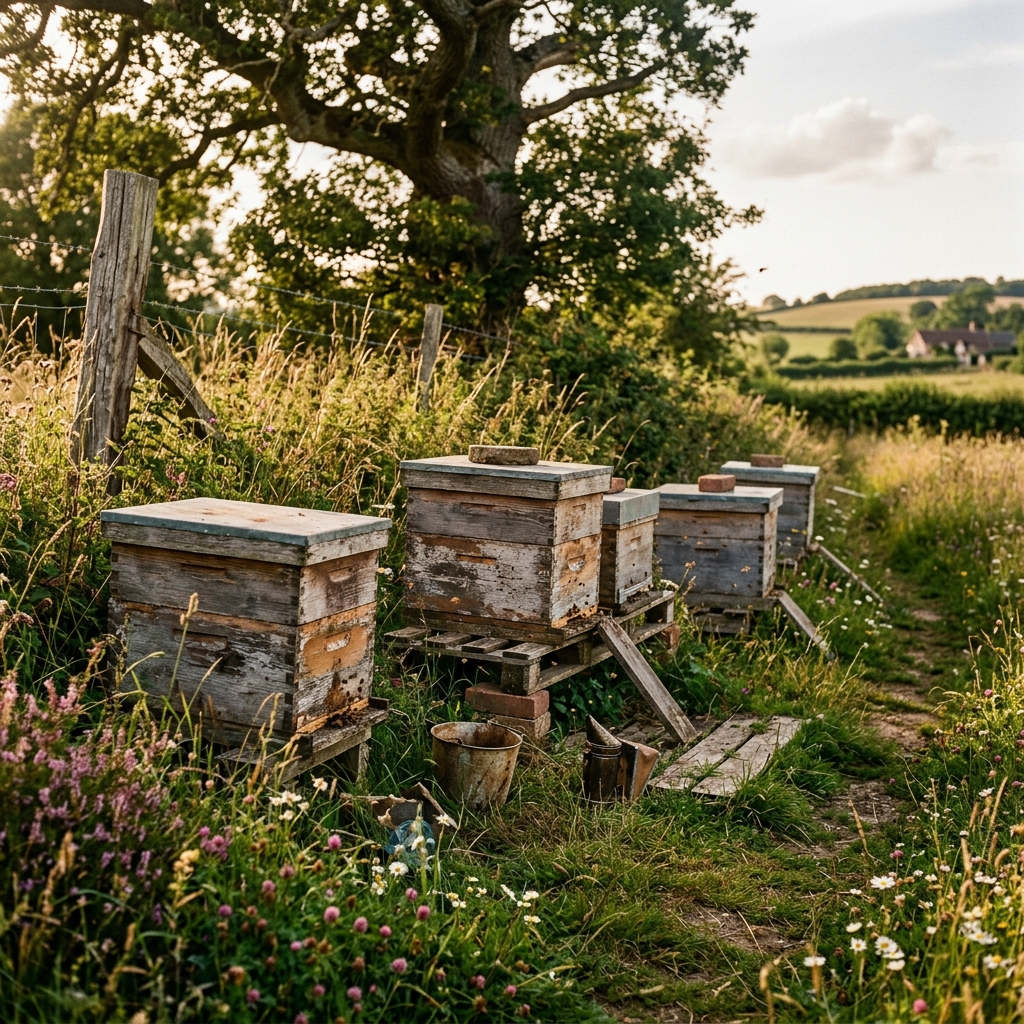
A 5-frame nuc box is one of the more useful pieces of equipment a beekeeper can own, and it's genuinely simple to build yourself from a single sheet of plywood. You don't need advanced woodworking skills, just basic tools and a bit of patience.
This guide walks through a working design, the cut list, and how to put it together.
What You'll Need
- Half-inch plywood, enough for the bottom, two side walls, front, back, and top
- Wood glue, such as Titebond II or III
- A staple gun, ideally 18-gauge with 3/4 by 1/4 inch crown staples, though nails or screws work as an alternative
- A saw for cutting plywood to size
- A drill for the entrance and ventilation holes
Cut List
Swipe sideways on the table below if you're on a phone and it doesn't fit your screen.
| Piece | Dimensions |
|---|---|
| Bottom | 20-1/8" x 9-5/8" |
| Side walls (x2) | 20-1/8" long x 10-1/4" tall |
| Front and back (x2) | 8-1/2" wide x 10-1/4" tall |
| Top | Cut to overhang roughly 1/2" on all sides |
These are one working set of measurements, not an official industry standard. As long as the internal dimensions comfortably fit five deep frames with a bit of working room, small adjustments to fit your own material or preferences are fine.
Assemble the Box
Attach the sides to the bottom. Run a bead of glue along the edge, then staple the two side walls to the bottom panel.
Add the front and back. Glue and staple the front and back panels into place, closing up the box.
Drill your openings. Add an entrance hole in the front panel and ventilation holes in the back or bottom. Don't skip the ventilation, especially if you'll ever use the box as a starter cell builder or in hot weather.
Add Frame Rests
Cut small strips from scrap plywood to use as frame rests, the ledges that hold your frames up inside the box. Position them so the top bar of a frame sits slightly below the top edge of the box once hung, then glue and staple them into place on both side walls.
You'll likely end up with a small gap where the frame rest strip meets the wall that's wider than standard bee space. In my experience, bees generally don't bother building anything in that particular groove, so it hasn't caused problems, but it's not something I can promise will hold true for every hive.
Add the Top
A simple flat piece of plywood works fine as a top cover. Cut it to overhang the box slightly on all sides, then just set it in place and weight it down with a brick rather than fastening it. That keeps the box easy to open for regular checks.
If you want to feed a colony that's just getting started in the box, a small feeder jar that screws onto an opening in the top works well, and can be swapped for a solid cover later once the colony no longer needs supplemental feeding.
A Note on Using It Long-Term
Half-inch plywood is fine for in-season use, spring through fall, but it's thin enough that it's not ideal for overwintering a colony. If you want a box you can leave bees in through winter, building with 3/4-inch material instead gives you better insulation.
What You Can Use It For
A box like this works as a mating nuc, a starter cell builder for queen rearing, a resource hive, or simply a lightweight learning box for practicing hands-on skills. The same basic build serves all of these purposes, so it's worth having a couple on hand even if you only need one function at a time.
Frequently Asked Questions
What size plywood do I need to build a 5-frame nuc box?
Half-inch plywood is enough for the bottom, sides, front, back, and top. A single sheet is usually enough material for one or more boxes depending on how efficiently you lay out your cuts.
Can I use this box to overwinter bees?
Half-inch plywood works well for in-season use but isn't ideal for winter, since it doesn't insulate as well as thicker material. Use 3/4-inch plywood instead if you want a box that can hold a colony through winter.
What staples or fasteners work best for a plywood nuc box?
An 18-gauge staple gun with 3/4 by 1/4 inch crown staples works well for half-inch plywood. Nails or screws are reasonable alternatives if you don't have a staple gun.
Do I need to worry about bee space when adding frame rests?
There's often a gap wider than standard bee space where the frame rest strip meets the wall, but bees generally don't build in that specific spot in practice. It's still worth keeping an eye on rather than assuming it's a non-issue in every hive.
What can I use a homemade nuc box for besides raising queens?
The same basic box works as a mating nuc, a resource hive for supporting struggling colonies, or a learning box for practicing beekeeping skills on a smaller scale.