Checkerboarding is a simple way to get bees to draw out new comb faster in a honey super. It works by alternating frames that already have drawn comb with frames that don't, and it can make a real difference during an active nectar flow.
This guide covers what checkerboarding actually is, where the idea came from, and how to use it specifically to speed up comb drawing in your honey supers.
What Is Checkerboarding?
The technique was developed by Walt Wright, a longtime beekeeper from Tennessee, originally as a swarm prevention method. His version involves alternating frames of capped honey with empty drawn comb above the brood nest in early spring, before the colony's swarm instinct kicks in.
The idea is that this alternating pattern makes the colony believe it doesn't have enough stores secured yet, which encourages continued brood expansion instead of swarm preparation. You can read more about the original method and its history on Wikipedia's overview of checkerboarding.
A Different Use: Speeding Up Comb Drawing
What this guide focuses on is a different, more common use of the same basic idea. Instead of swarm prevention, many beekeepers use the alternating pattern later in the season, in honey supers, purely to get undrawn foundation built out faster.
The logic is similar. Placing an undrawn frame between two frames that already have comb on them seems to encourage bees to draw it out faster than if it were surrounded by other undrawn frames. I've tried this in my own supers when frames have sat mostly untouched for weeks, and the difference after a couple of weeks was noticeable enough that I stuck with it. It works well alongside another approach, moving whole supers to your strongest hives to get them drawn out faster.
How to Set It Up
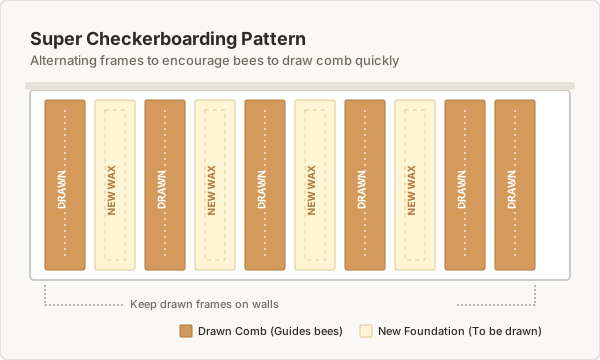
Alternate drawn and undrawn frames. Take your honey super and space out the frames that already have drawn comb, then fill the gaps with undrawn foundation frames, one drawn, one undrawn, back and forth across the box.
Avoid the wall position. Try not to put an undrawn frame directly against the box wall. Bees tend to work outer frames less than the ones in the middle, so a frame in that spot is likely to get drawn out the slowest.
Rearrange freely within the super. Unlike a brood box, a honey super doesn't hold brood, pollen, or the queen. That means you can safely move frames around within it, checking progress and swapping positions, without the risks that come with disturbing a brood nest.
Keep spacing even. After rearranging, make sure frames are spaced evenly with a small gap on each side. Uneven spacing makes it harder for bees to draw straight comb and harder for you to pull frames later.
A Real Risk Worth Knowing About
Checkerboarding isn't guaranteed to go perfectly. Since it disrupts the pattern bees would naturally follow, there's a real chance some frames come out drawn unevenly, sometimes called wonky comb, especially on frames that weren't drawn out much to begin with.
This doesn't mean the technique isn't worth trying. It's a reasonable trade to accept for faster comb drawing overall, but go in expecting that not every frame will come out picture-perfect, and check on progress periodically rather than assuming it'll go smoothly the whole way through.
What Checkerboarding Should Not Be Used For
Don't apply this same rearranging logic to your brood box. Moving brood frames around introduces real risks that don't exist in a honey super, including chilled brood, a harder time finding the queen, and disrupting the colony's own organization of resources.
The original checkerboarding method was designed specifically for use above the brood nest, not inside it. Whether you're using the technique for swarm prevention or just to speed up comb drawing, the brood box itself stays off-limits to this kind of frame shuffling.
A Few More Honey Super Tips
While you're checking on drawn frames, a couple of habits are worth building in.
Don't shake nectar out of a frame just to see how much is in there. It wastes the work bees put into collecting it, and if any of it lands on the ground near the hive, it can attract robbing.
Foundation orientation also doesn't matter as much as people think. Whether the hexagon pattern on a sheet of foundation is oriented one way or flipped, bees draw it out the same either way. They build their own wax regardless of which way the printed pattern is facing.
Checkerboarding Quick Reference
Swipe sideways on the table below if you're on a phone and it doesn't fit your screen.
| Do | Don't |
|---|---|
| Alternate drawn and undrawn frames in honey supers | Checkerboard inside the brood box |
| Keep undrawn frames away from the wall position | Leave frame spacing uneven after rearranging |
| Rearrange freely within a honey super | Shake frames to check nectar volume |
Frequently Asked Questions
What is checkerboarding in beekeeping?
Checkerboarding is a technique developed by Walt Wright that alternates frames of capped honey with empty drawn comb above the brood nest, originally used to prevent swarming. Many beekeepers also use the same alternating principle in honey supers simply to speed up comb drawing, which is a different application of the same basic idea.
Does checkerboarding work in the brood box?
The original method was designed for use above the brood nest, not inside it. Rearranging frames within the brood box carries real risks, like chilled brood or losing track of the queen, that don't apply to a honey super.
How long does it take to see results from checkerboarding a honey super?
Results vary with the strength of the nectar flow and the colony, but a noticeable difference in comb drawing over a couple of weeks is common during an active flow. It's worth checking progress periodically rather than assuming a fixed timeline.
Do I need to worry about frame orientation when checkerboarding?
No. The direction a sheet of foundation faces doesn't affect how well bees draw it out. They build their own wax structure regardless of which way the printed pattern is oriented.
Is it safe to rearrange frames in a honey super?
Yes. Honey supers don't contain brood, pollen stores, or the queen, so moving frames around to checkerboard or check progress doesn't carry the same risks as rearranging a brood box.
Does checkerboarding always give perfect results?
Not always. Since it disrupts the pattern bees would naturally follow, some frames can come out drawn unevenly, especially ones that weren't drawn out much to begin with. It's still generally worth it for faster overall comb drawing, but expect some inconsistency rather than a picture-perfect result every time.