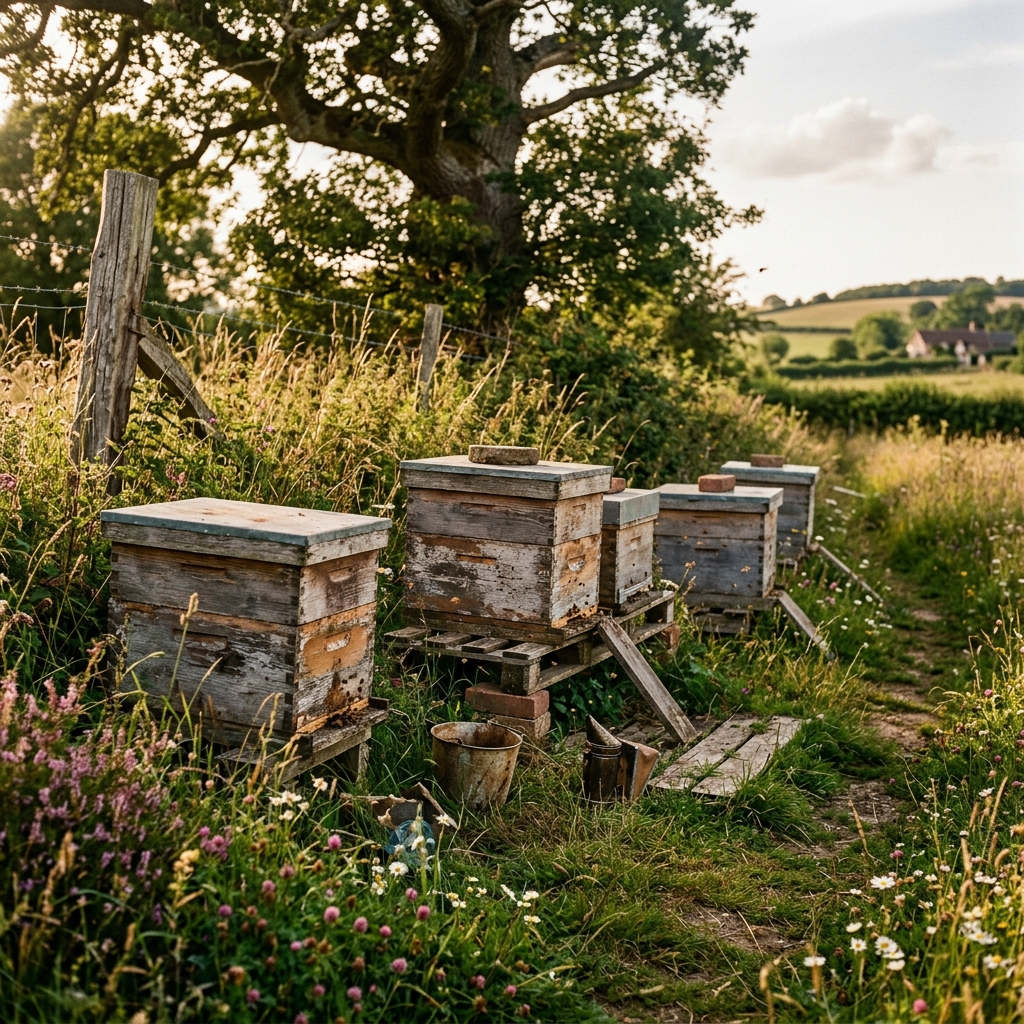
Not every hive draws out comb at the same speed. If you've got a super sitting mostly untouched on one hive while another colony is filling frames as fast as you can add them, the fix isn't always more equipment. Sometimes it's just moving the super to the hive that's actually ready for it.
This guide covers how to match supers to your strongest hives, get them drawn out fast, then relocate them wherever you actually need them. It's a good complement to checkerboarding drawn and undrawn frames within a single super, since the two techniques work at different scales.
Why This Works
Drawing out comb takes real energy and a lot of wax production, and that comes down to colony strength more than anything else. A hive with a large population and plenty of foragers can pull comb out fast. A newer package, a smaller colony, or one that's still building up simply doesn't have the force to do it quickly, no matter what you do to the box itself.
In my experience, there's no real trick to speeding up a weak colony's comb-drawing pace beyond giving it time to grow. Weather, rain, and the strength of the nectar flow all play a role too, but colony strength is the biggest lever by far. If one hive is drawing out frames fast and another isn't, it's usually not about what you're doing wrong. It's about which hive currently has the numbers to do the work.
How to Do It
Identify your strongest hive. Look for the colony that's already drawing out comb quickly and filling frames without much hesitation. That's your candidate.
Add the undrawn super to it. Take a super that's undrawn or only partially drawn from wherever it's sitting and place it on the strong hive.
Let it draw out, and check periodically. Give the colony time to work the frames. Checking in every week or two lets you track progress without disturbing them too often.
Move it once it's ready. Once the super is drawn out, whether fully capped or just built out enough to be useful, relocate it to whichever hive actually needs the space, like a newer package or a colony that's run out of room.
Before You Move Any Super, Check for the Queen
Always confirm there's a queen excluder in place before assuming a super is queen-free. If there isn't one, pull a frame, ideally one with straight comb and little bee activity, and check for eggs or brood before moving anything. That confirms the queen hasn't wandered up into the super. If she has, see the guide on what to do if you find your queen or brood in a honey super.
Moving a super with the queen in it by accident disrupts both the hive you're taking it from and the one you're adding it to, so this check is worth the extra minute every time.
A Few Practical Tips
Date and label your supers. I write the date a super goes on a hive, along with whether it was drawn or undrawn at the time, right on the box using a paint marker. That way I actually know how long a hive took instead of guessing later.
Store empty supers on a hive when you can. Keeping an empty super stacked on top of an active hive, rather than in a shed or storage building, helps keep the wax from drying out. Just watch closely for small hive beetles, since stored supers can become a hiding spot for them.
Don't leave scraped wax debris in the field. If you're cleaning burr comb or excess wax off frames while you're at it, dispose of the scraps away from the bee yard rather than leaving them out. Leftover wax and comb debris left near hives can attract small hive beetles or trigger robbing.
What About Rotating Frames Within a Super?
Some beekeepers occasionally flip or rotate individual frames within a super partway through the season, on the idea that it helps bees draw out the side that's been neglected. It's a reasonable idea, but not something I do routinely myself, and plenty of beekeepers skip it entirely without noticing a real downside.
Is This Hive a Good Candidate?
Swipe sideways on the table below if you're on a phone and it doesn't fit your screen.
| Good Candidate | Not Ready Yet |
|---|---|
| Already drawing comb quickly on existing frames | Still building up population |
| Large, active forager population | Recently installed package or small nuc |
| Filling existing supers without much hesitation | Struggling to keep up with current frames |
Frequently Asked Questions
Why do some hives draw out honey supers faster than others?
It mostly comes down to colony strength. A hive with a large population and plenty of foragers has the resources to draw comb quickly, while a newer or smaller colony simply doesn't have the force to do it fast regardless of the equipment.
How do I make sure I'm not accidentally moving the queen with a super?
Check for a queen excluder first. If there isn't one, pull a frame with little bee activity and check for eggs or brood before moving the super, which confirms whether the queen has moved up into it.
Is it safe to store empty honey supers directly on a hive?
Yes, and it helps keep the wax from drying out compared to storing supers separately. The main thing to watch for is small hive beetles, since stored supers can give them a place to hide.
How long does it typically take a strong hive to draw out a new super?
It varies with colony strength, weather, and how active the nectar flow is, so there's no fixed timeline. Dating the super when you add it and checking in every week or two is the most reliable way to track progress for your own hives.
Should I rotate frames within a super to help them draw out evenly?
Some beekeepers do this, and it's a reasonable idea, but it's not something every beekeeper bothers with. Skipping it doesn't seem to cause a real problem for most colonies.