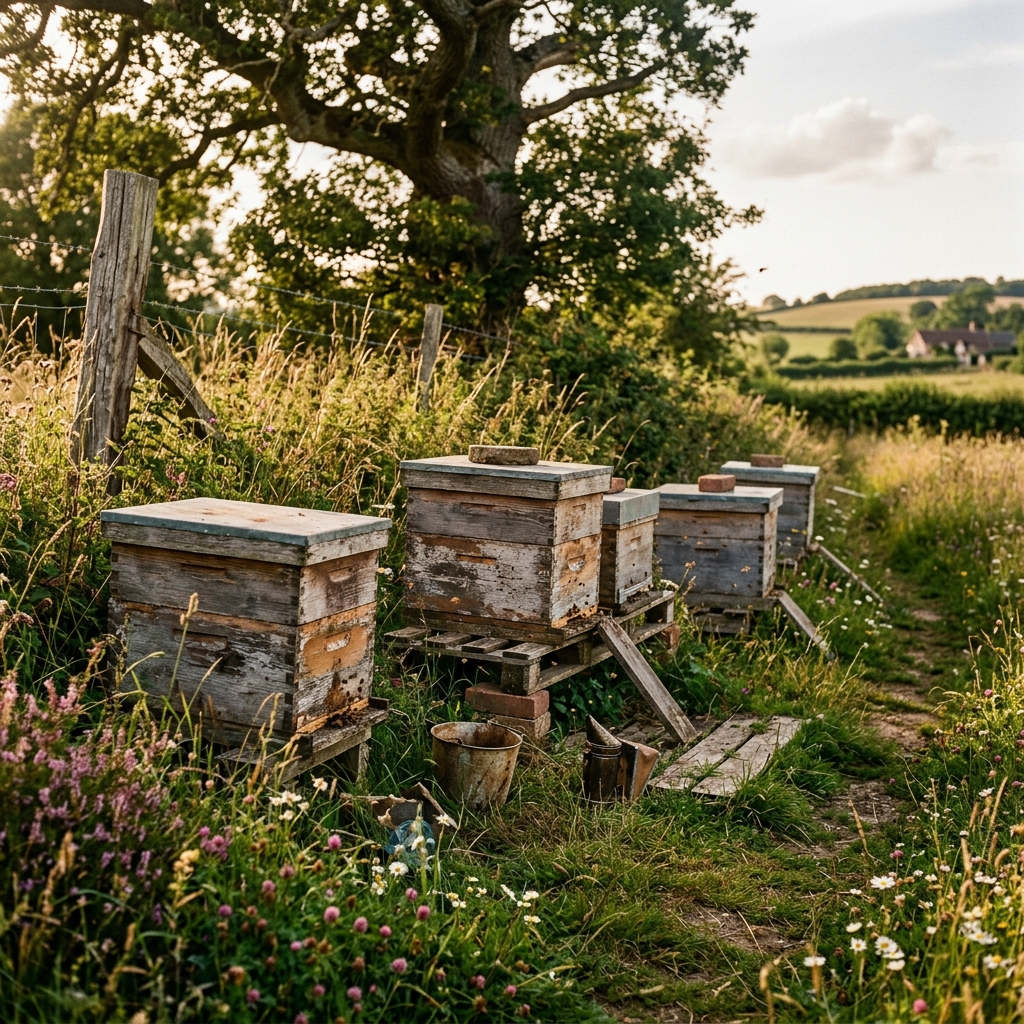
Mid-summer is a common time for queen problems to quietly surface. A hive can look fine from a distance while population and brood quietly drop off underneath, and by the time it's obvious, real time has already been lost.
This guide covers the signs to watch for, a real way to estimate how serious it is, and two paths to turn it around.
Signs of a Failing Hive
Low population relative to what you'd expect for the time of year is the biggest tell. Alongside that, look for little to no capped worker brood, sometimes with only drone brood present, and few foragers going in and out despite the hive having food resources on hand.
The usual cause is a queen problem. She may never have mated successfully, been lost during a mating flight to a bird or bad weather, or been lost after a swarm without a replacement taking hold. For a fuller rundown of queenless indicators, Honey Bee Suite's guide to recognizing a queenless hive is a solid reference.
Rule Out Laying Workers
Before assuming a hive is simply queenless, check how many eggs are in each cell. A queen almost always lays a single egg per cell. Multiple eggs scattered in the same cell are the clearest sign of laying workers instead, since worker bees can't reach the bottom of a normal-depth cell and end up depositing eggs off to the side or in clusters.
This isn't an absolute rule. A newly mated queen occasionally lays more than one egg per cell for a short stretch before settling into a normal pattern, so a few doubled cells alone aren't necessarily proof of laying workers. But if you're seeing it consistently across multiple frames, that points toward laying workers rather than a queen who's simply new or recently accepted, and changes how you'd approach fixing the hive.
Estimate Your Population, Don't Just Eyeball It
A rough benchmark worth knowing: a deep frame completely covered in bees on both sides holds somewhere around 2,000 to 2,250 bees. That gives you a real number to work from instead of just a gut feeling.
Look at each side of a frame and estimate what percentage is actually covered, then scale that against the full benchmark. Doing this across a few frames gives you a rough total population instead of a vague impression, and it's a genuinely useful habit for judging whether a hive is where it should be for the season.
The Fastest Fix: A Resource Hive
A resource hive, often a small mating nuc, is a backup colony kept specifically so you have somewhere to pull from when another hive needs help. That can mean frames of bees, frames of brood, or in some cases an entire spare mated queen. If you'd rather build your own instead of buying one, see the guide on building a 5-frame nuc box.
Moving several frames of bees and brood from a resource hive into a failing one can turn things around fast, often within a couple of weeks. When you have a choice, favor frames of capped brood over open brood with eggs or larvae. Capped brood doesn't need feeding and will simply emerge into new workers within days, giving a thin nurse bee population an immediate boost without adding more mouths they have to feed right away. If you can manage it, keeping at least one resource hive per production hive gives you a real safety net for exactly this situation. I keep a few small nucs going for this exact reason, and more than once they've saved a hive that would have otherwise been a lost cause.
If you want to take this a step further, it's also possible to physically transfer an entire forager force from a resource hive into the struggling one, not just frames of brood. That technique is covered separately in a guide on transferring a forager force to boost a weak hive.
Condense the Hive While You're At It
A failing hive is usually overspaced for its actual population. While you're adding frames of bees and brood, pull out any empty or undrawn frames that aren't doing the colony any good, and set them aside to reuse elsewhere.
Resist the urge to put honey supers back on right away, even if the hive normally carries them. A weakened colony can't cover and defend that much extra space, and empty supers just add more area for a small population to try to manage. Wait until the population has genuinely recovered before adding that space back.
What to Do Without a Resource Hive
If you don't have a resource hive to pull from, the most direct option is ordering a mated queen and introducing her. It works, but it's worth understanding the real tradeoff involved. For the actual introduction technique, see the guide on introducing a new queen with a frame cage.
Getting a mated queen shipped typically takes a week or two. During that time, the failing hive keeps losing population, since old workers are dying off faster than new ones are emerging. By the time your new queen arrives and starts laying, the colony may already be too thin to properly support raising her brood, which slows the whole recovery down into something closer to a snowball than a quick fix.
This is the real argument for keeping more than one hive if you can. A second hive gives you a source of bees and brood to pull from immediately, rather than waiting on a shipment while a single struggling colony keeps sliding. In some cases, fully combining a failing colony into a stronger one with the newspaper method makes more sense than trying to keep it going on its own.
Stay Ahead of It
Inspecting every hive at least once every two weeks is what actually catches this early. Left unchecked for four to six weeks, a hive can go from a minor queen issue to a population crisis without you noticing until it's much harder to fix.
A Simple Trigger for Deciding Whether to Replace Her
One useful test when you're unsure whether a queen is actually the problem: look for polished or dried-out cells, the cells workers have cleaned and prepared specifically for the queen to lay in. If those cells are ready and waiting but she's simply not using them despite walking around nearby, that's a real sign to consider replacing her. If there's no clean, prepared space available yet, the more likely explanation is that the colony hasn't caught up on comb space, not that the queen herself is failing. It's worth telling the two apart before deciding a queen needs to go.
Two Ways to Rescue a Failing Hive
Swipe sideways on the table below if you're on a phone and it doesn't fit your screen.
| Method | Speed | What You Need |
|---|---|---|
| Pull frames from a resource hive | Fast, often days | A second hive or mating nuc on hand |
| Order and introduce a mated queen | Slower, one to two weeks plus recovery time | Just the one struggling hive |
Frequently Asked Questions
What causes a hive to suddenly start failing in summer?
Usually a queen problem: she never mated successfully, was lost during a mating flight, or was lost after a swarm without a replacement establishing. The population decline that follows often isn't obvious until weeks after the actual cause.
How do I know if a hive has laying workers instead of just being queenless?
Check how many eggs are in each cell. Multiple eggs scattered in the same cell point to laying workers, since a queen almost always lays just one per cell. A few doubled cells alone aren't conclusive, since a newly mated queen can briefly do the same thing, but a consistent pattern across frames is a strong sign.
Should I remove empty frames or add supers back when rescuing a failing hive?
Pull out empty or undrawn frames while you're adding brood and bees, since a weakened colony can't cover extra space efficiently. Hold off on adding honey supers back until the population has genuinely recovered.
How can I estimate how many bees are in my hive?
A deep frame fully covered on both sides holds roughly 2,000 to 2,250 bees. Estimating the percentage of coverage on each frame you check gives you a rough population total to compare against what's normal for the season.
What is a resource hive and do I need one?
A resource hive is a small backup colony, often a mating nuc, kept specifically so you have bees, brood, or a spare queen to pull from if another hive needs help. It's not required, but it's one of the fastest ways to rescue a failing hive if you have one available.
Should I move capped brood or open brood when rescuing a hive?
Favor capped brood when you have the choice. It doesn't need feeding and emerges into new workers within days, giving a thin nurse bee population an immediate boost without adding more larvae they have to feed right away.
How do I know if a queen actually needs to be replaced?
Check for polished or dried-out cells, cells the workers have prepared specifically for laying. If those are ready but she's not using them, that points to a real problem with her. If there's no prepared space yet, the colony likely just hasn't caught up on comb, not a failing queen.
What if I only have one hive and it's failing?
Ordering a mated queen is your main option, but expect a real lag: a week or two to receive her, during which the hive keeps losing population, and then extra time for the colony to build back up once she's laying. Keeping a second hive avoids this specific vulnerability.
How often should I inspect my hives to catch this early?
At least once every two weeks. Going longer than that risks missing a queen problem until the population has already dropped significantly.