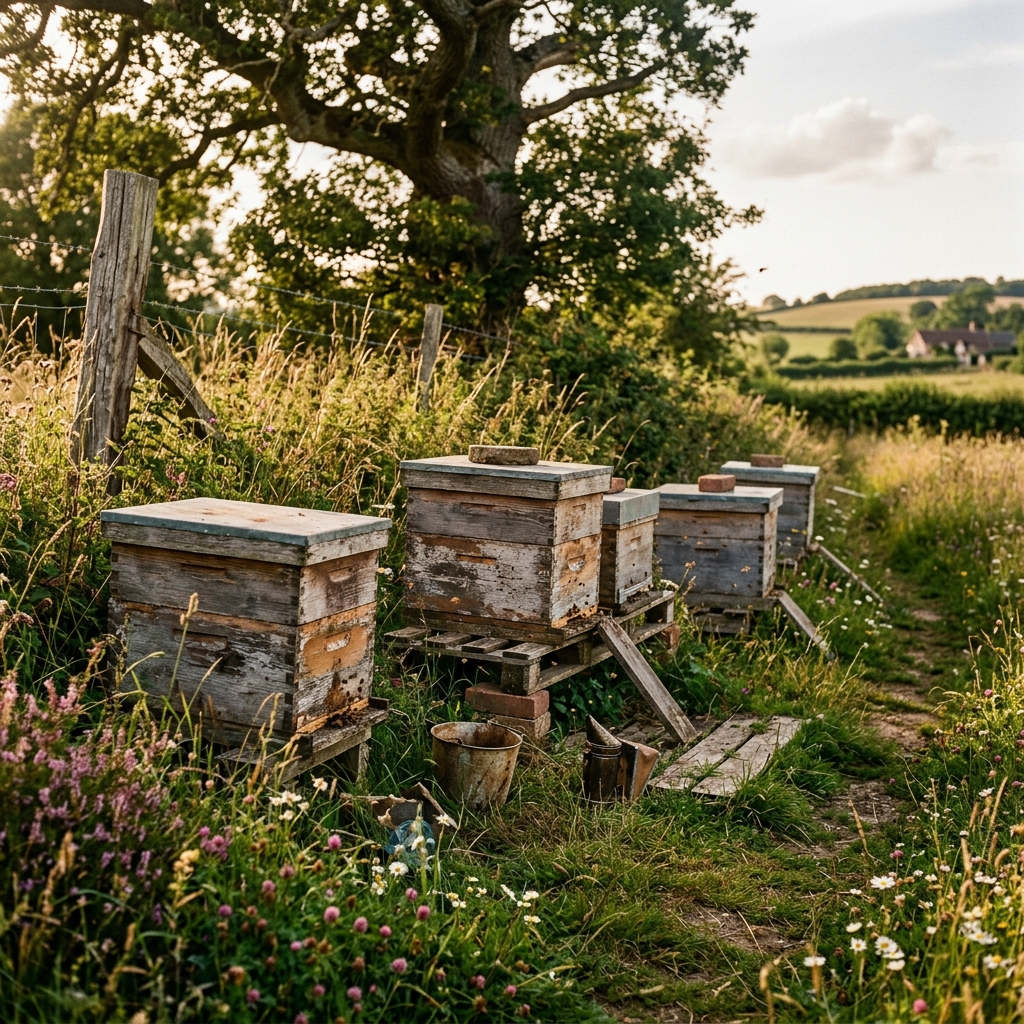
When it's time to add another honey super, you've got two options: set the new one on top of what's already there, or slide it in underneath, directly above the brood nest. Both have real advocates, and neither one wins outright. The right call depends more on your own hive and your own priorities than any universal rule.
What Top Supering and Bottom Supering Actually Mean
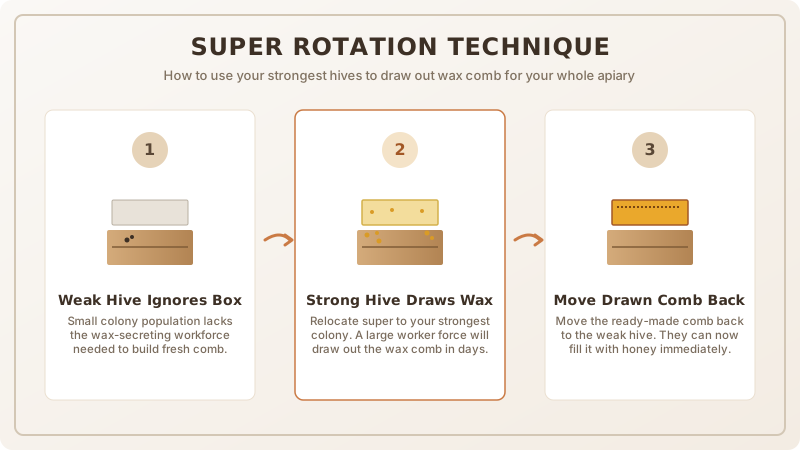
Top supering means placing a new, empty super on top of the entire stack, right under the lid. It's the simplest physical move you can make when a hive needs more room.
Bottom supering means placing the new super directly above the brood nest, below any supers that are already partly filled. It takes more effort, since you have to lift the existing supers off first, reposition the new box, then put everything back on top of it.
The Case for Top Supering
Top supering is less physical work every single time you check on the hive. You're not lifting full supers off just to add or inspect a new one, which matters more than it sounds like once those boxes are packed with honey.
It's also easier to monitor. A quick look under the lid tells you how the newest super is progressing without disturbing anything else. And despite the common assumption that bottom supering produces more honey, research comparing the two methods hasn't shown a clear advantage either way in overall yield.
The Case for Bottom Supering
The reasoning behind bottom supering is that fresh comb placed closer to the brood nest, where it's warmer and where more of the workforce already is, gets drawn out and worked faster than a box sitting on top of everything else. It can also make sense when your existing top super is already heavily worked and you want the colony to start on fresh space sooner rather than waiting for that top box to fill first. If getting comb drawn out faster is your main goal regardless of which position you choose, checkerboarding drawn and undrawn frames is another technique worth combining with either approach.
The Real Risk of Bottom Supering: The Queen Might Follow
Placing a super directly above the brood nest puts it right where the queen has easy access, and without a queen excluder, she can wander up and start laying extensively in that fresh comb. What was meant to be a honey super can turn into an unplanned extension of the brood nest.
There's a genuine mechanism that helps prevent this, though it isn't a guarantee. A super that's already filled and mostly capped, sitting between the brood nest and a new empty super, tends to act like a natural barrier. Queens are generally reluctant to cross a band of capped honey to reach new open comb, which is why some beekeepers get away with bottom supering repeatedly without ever using a physical queen excluder. But "generally reluctant" isn't the same as "never," and it's entirely possible to end up with a queen in that box anyway, especially in a hive with a particularly prolific queen. I've had it happen on a hive that otherwise looked completely normal, so I don't rely on the honey-barrier effect alone anymore if I can help it.
If you do find brood in a super you didn't intend to be a brood box, the fix isn't complicated. See the guide on what to do if you find your queen or brood in a honey super for the full walkthrough.
A Middle-Ground Option
If you can't decide, you don't have to pick just one. Some beekeepers trade a few frames between the old and new super, moving some already-drawn or partially filled frames into the new box while leaving some undrawn frames in the older one. That gives the new super a head start with comb the bees don't have to build from scratch, while still leaving open work for them in the existing box.
Why Results Vary So Much From Hive to Hive
Don't be surprised if the same method produces wildly different results on two hives sitting right next to each other. Population, the number of active foragers, and how a particular queen behaves all vary more than people expect, even between colonies that started the season under identical conditions. A technique that fills and caps a super in ten days on one hive might show almost nothing on the hive beside it over the same stretch.
What This Means for You
Either method is a reasonable starting point. If avoiding the risk of brood ending up in your honey supers matters most to you, use a queen excluder or default to top supering. If saving your back on heavy lifting is the bigger concern, top supering wins there too. If you're chasing faster comb-drawing and are willing to manage the queen-excluder question directly, bottom supering is worth trying. Whichever you pick, check back within a week or two rather than assuming it's progressing the way you expect.
Top Supering vs. Bottom Supering at a Glance
Swipe sideways on the table below if you're on a phone and it doesn't fit your screen.
| Factor | Top Supering | Bottom Supering |
|---|---|---|
| Physical effort | Low, just set it on top | Higher, existing supers must be lifted off |
| Risk of brood in the super | Low | Real, unless using a queen excluder |
| Theoretical comb-drawing speed | Standard | Potentially faster, closer to the brood nest |
| Overall honey yield | No proven advantage either way | No proven advantage either way |
Frequently Asked Questions
What's the difference between top supering and bottom supering?
Top supering places a new empty super on top of the entire stack. Bottom supering places it directly above the brood nest, below any supers that are already partly filled.
Which method produces more honey?
Research comparing the two hasn't shown a clear yield advantage for either one. The bigger factors tend to be the individual hive's population and forager numbers rather than which supering method you choose.
Do I need a queen excluder for bottom supering?
It's not strictly required, since a filled super above the brood nest can act as a natural barrier, but it's not a guarantee. Using an excluder removes the risk entirely if you'd rather not leave it to chance.
What do I do if I find brood in a super I didn't want brood in?
Adding a queen excluder above the brood nest at that point solves it going forward. For the full walkthrough, see the guide on what to do if you find your queen or brood in a honey super.
Why did bottom supering work great on one of my hives but not another?
Hive-to-hive variation is normal. Population, forager numbers, and how a particular queen behaves all differ, sometimes significantly, even between colonies that seem otherwise identical.
Can I use both methods at once?
Yes. Trading some frames between the old and new super, so the new box starts with a few already-drawn frames, is a reasonable middle ground if you don't want to commit fully to either approach.