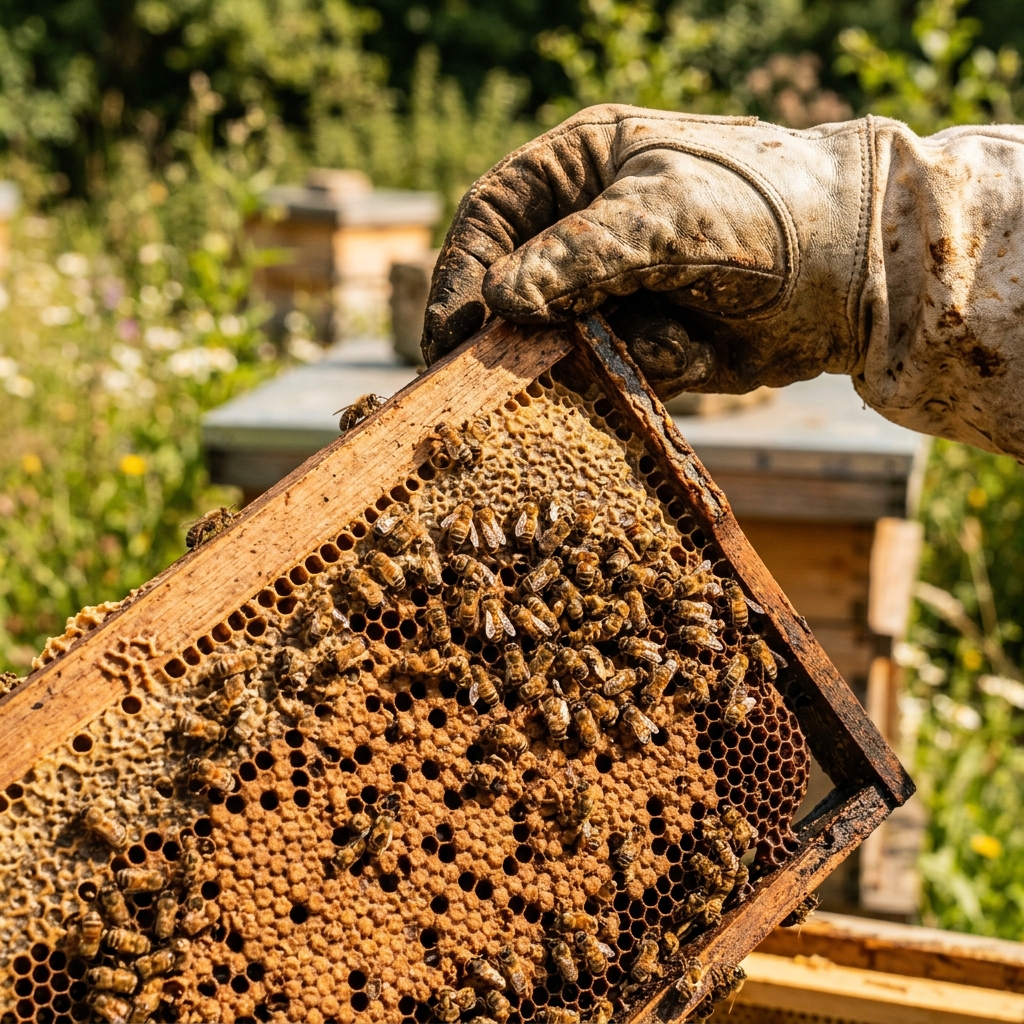
Bees have off days, just like people. A hive that's calm one week can turn noticeably more defensive the next, and it doesn't necessarily mean anything is wrong with the colony long-term. What matters is recognizing it early and adjusting how you work rather than pushing through at your normal pace.
This guide covers how to spot early signs of a defensive mood, the habits that actually reduce stings, and what to do if you do get stung mid-inspection.
Recognize the Signs Before You're Deep In
Watch how bees react as soon as you start. Bees flying up off a frame aggressively, bumping into your veil, or following you a few steps away from the hive are all early signals that today isn't a calm day.
This can vary day to day for reasons that aren't always obvious, weather, a recent disturbance, time of day. Extreme heat in particular tends to make bees noticeably crankier, which the guide on protecting bees during extreme heat covers in more detail. A defensive day doesn't mean the colony has a permanent temperament problem, so don't assume you need to requeen just because of one rough inspection.
Slow Down, Don't Speed Up
The instinct when bees seem agitated is to hurry up and finish faster. That usually backfires. Sudden movements, quick lifts, and fast hand motions are exactly what trigger more defensive responses.
Move frames deliberately and avoid bumping boxes or frames against anything as you work. Slowing down feels counterintuitive when you want to be done, but it genuinely reduces how many stings you walk away with.
Stay Out of the Flight Path
Position yourself behind or to the side of the hive rather than directly in front of the entrance. Standing in the main flight path puts you in the way of returning foragers and tends to escalate tension faster than working from an angle where you're less of an obstacle.
Keep Your Smoker Going
Consistent, generous use of a smoker throughout the inspection, not just once at the start, helps keep bees calmer the whole time you're working. Smoke is believed to interfere with how bees detect and respond to alarm pheromone, which is a big part of why it works as well as it does.
If You Get Stung, Smoke the Spot Immediately
A sting releases alarm pheromone right at that location, and other bees can pick up on it and target the same spot again. Research on honey bee defensive behavior backs up what experienced beekeepers already do by habit: smoke disrupts that chemical signal. You can read more about how alarm pheromone communication works on Bee Health Extension's overview of honey bee communication.
Puff smoke directly on the sting site before continuing to work in that area. It's a small habit that meaningfully cuts down on repeat stings in the same spot.
Don't Carry Agitated Bees to Your Next Hive
If a few bees are still following you or bumping your veil after finishing one hive, don't walk straight to the next one. Take a wider loop around the apiary instead. Leading agitated bees directly to a calm hive can rile that colony up too, turning one rough inspection into two.
Handle Heavy Boxes Carefully
Boxes full of honey and nectar get heavy fast, and awkward lifting is its own safety issue on top of stings. Look for boxes with external handles, since they give you real leverage instead of trying to grip a smooth edge.
When separating two boxes that are stuck together with propolis, place your foot on the lower box as you lift the top one. It keeps the bottom box from lifting along with it and helps you avoid a sudden, awkward release. For the same principle applied to individual frames, see the guide on using a hive tool to remove stuck frames.
Keep Protective Gear Within Reach
On calm days it's tempting to work with minimal gear, just a hat and veil. That's fine, but keep a jacket nearby so you can add it quickly if the mood shifts partway through. It's a lot easier to grab it in the moment than to walk away and come back.
Know When to Stop
If bees clearly aren't settling down despite slowing your pace and using smoke, it's fine to close things up and come back another day rather than pushing through a full inspection. Finishing every task on the original list isn't worth a string of extra stings when the colony is telling you it needs space.
Signs Your Bees Are Getting Defensive
Swipe sideways on the table below if you're on a phone and it doesn't fit your screen.
| Sign | What To Do |
|---|---|
| Bees flying up aggressively off a frame | Slow your movements and add more smoke |
| Bees bumping your veil or following you | Take a wide loop before approaching another hive |
| You've just been stung | Smoke the sting site before continuing |
| No improvement after slowing down and smoking | Close up and return another day |
Frequently Asked Questions
Why are my bees suddenly more aggressive than usual?
It can vary day to day due to weather, recent disturbances, or factors that aren't always obvious. One defensive inspection doesn't necessarily mean the colony has a lasting temperament problem.
What should I do if I get stung while working a hive?
Smoke the sting site right away. It masks the alarm pheromone released at that spot, which reduces the chance of other bees targeting the same area again.
Should I move quickly or slowly when bees seem agitated?
Slowly. Fast movements tend to trigger more defensive behavior, while slow, deliberate motions with consistent smoke use generally calm things down faster than rushing through.
Can agitated bees from one hive affect a nearby hive?
Yes. If bees are following you after leaving one hive, walking directly to the next one can pass that agitation along. Taking a wider path around the apiary helps avoid that.
Is it bad to stop an inspection early if bees are too defensive?
No. If slowing down and smoking more doesn't calm things, closing up and returning another day is a reasonable call, not a failure.