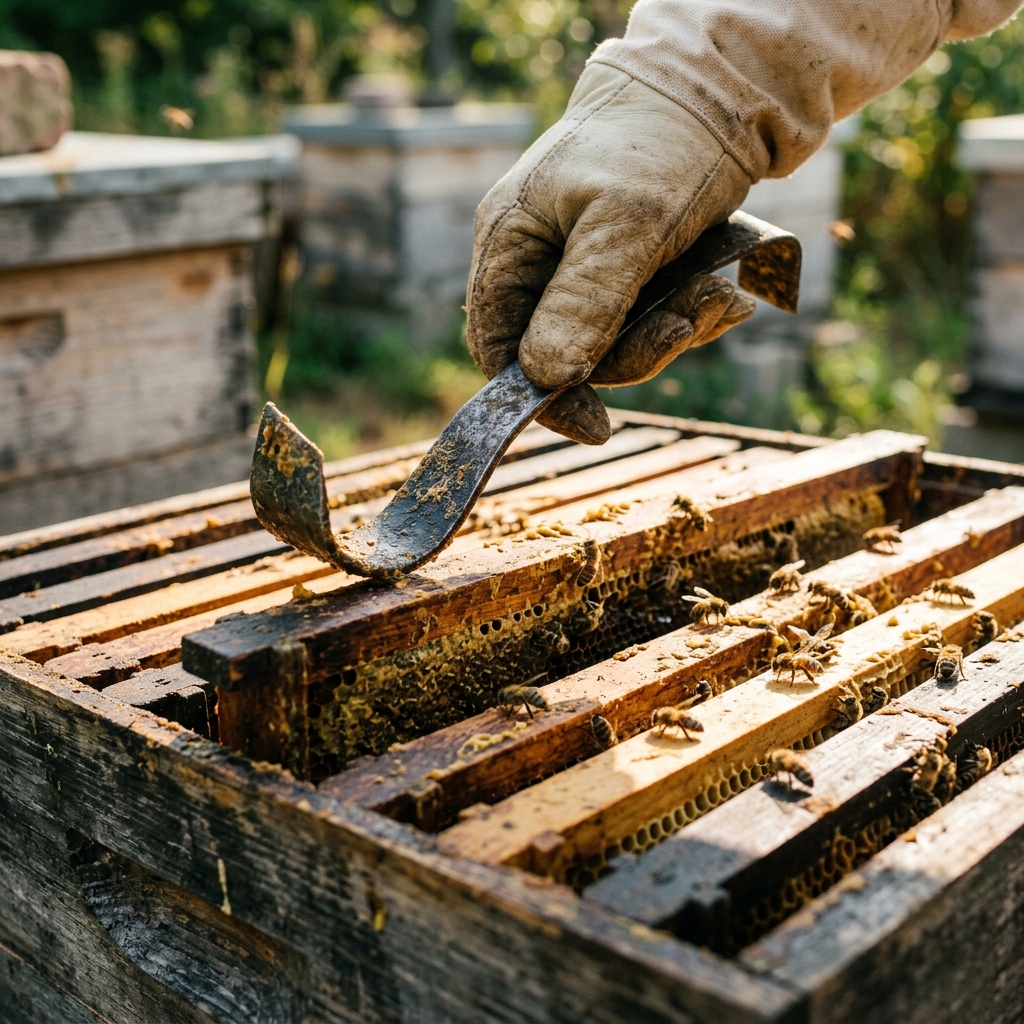
How to Use a Hive Tool to Remove Stuck Frames Without Breaking Them
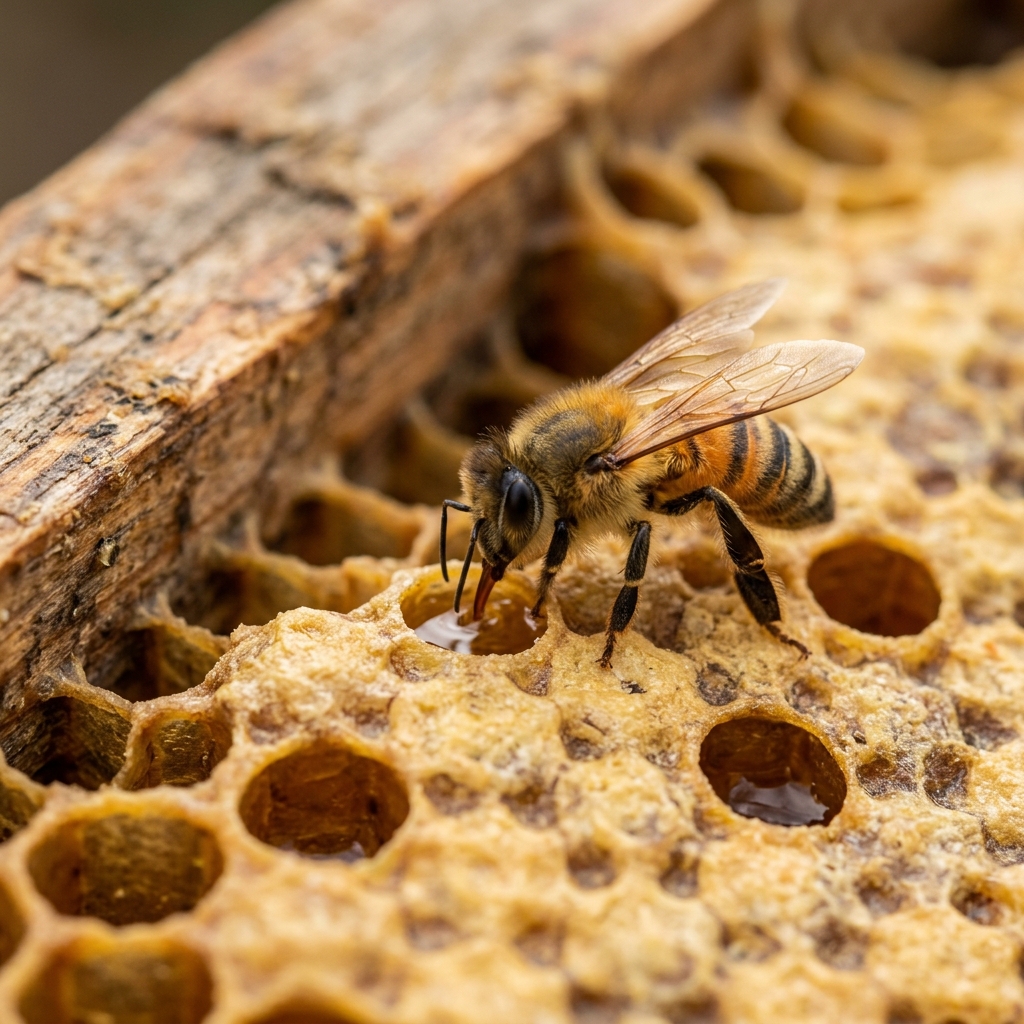
Propolis can glue wood almost as tight as cement. Learn the step-by-step prying motions for J-hook and flat tools that save your box and protect the bees.
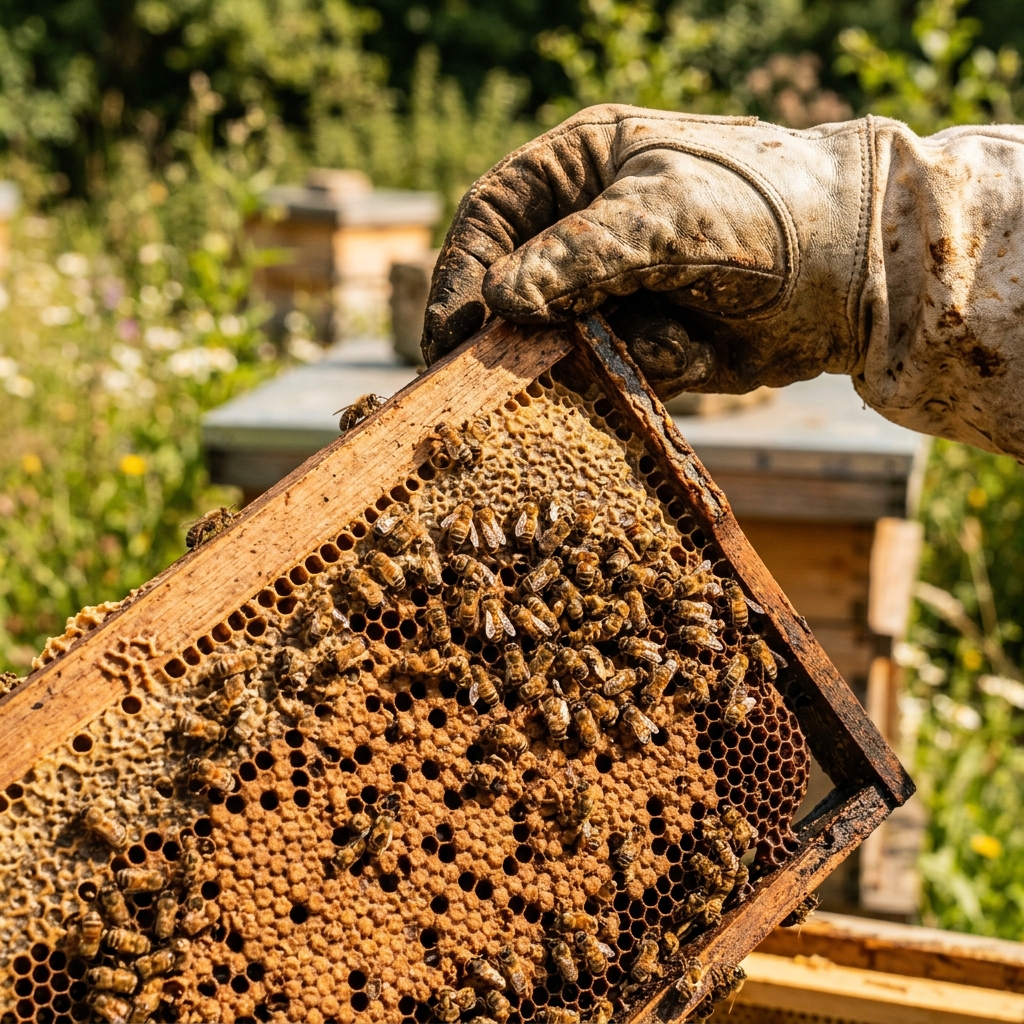
Welcome to Blosmo Honey World. Explore our detailed research on natural hive setups, comb-safe extraction mechanics, and organic Varroa management plans. No fluff, just what actually works inside the colony.
Pure honey is a fingerprint of the local flora and climate. Here is how regional blooms shape the color, moisture, and flavor profile of raw honey.
Known for its clear, light amber tint. Features a rich, buttery consistency with a distinct, spicy floral undertone.
A deep, robust golden honey that blends clover, aster, and dandelion nectar. Taste varies by annual rain patterns.
Clear, light-bodied, and mild. The classic standard for table use, harvested mainly from white clover patches.
Harvested during apple and cherry bloom. Highly aromatic with fresh fruit notes and a clean, light finish.
Propolis can glue wood almost as tight as cement. Learn the step-by-step prying motions for J-hook and flat tools that save your box and protect the bees.
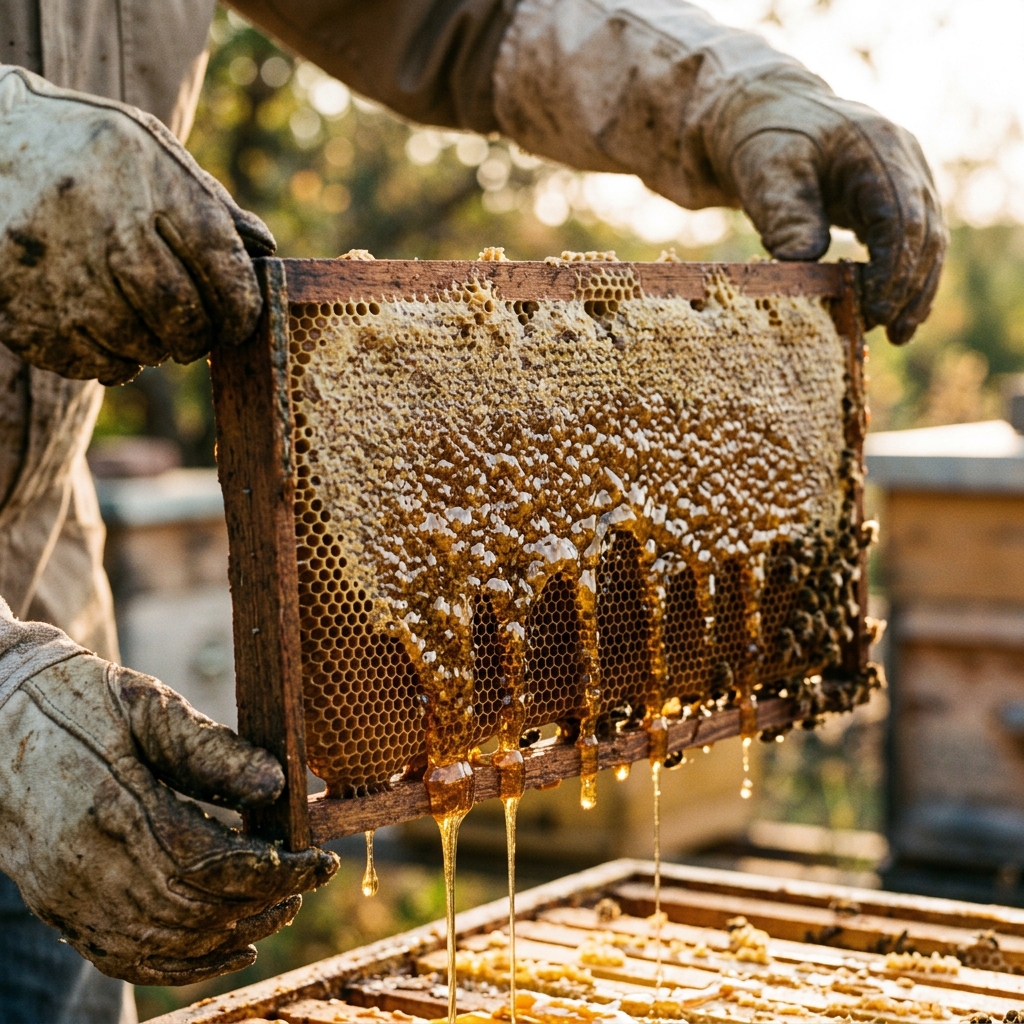
July is a turning point in the apiary. Monitor mite levels, check summer food reserves, manage hive temperatures, and protect weak colonies from robbing.
A refractometer tells you the exact moisture content of your honey before you harvest it. That one number determines whether your honey will store well or ferment.
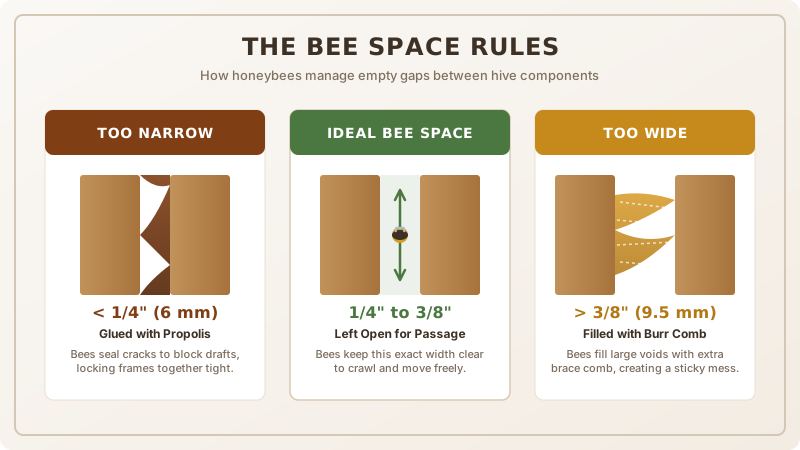
Bees leave a precise 1/4 inch to 3/8 inch gap for paths. Gaps smaller than that get glued with propolis; larger gaps fill with messy burr comb.
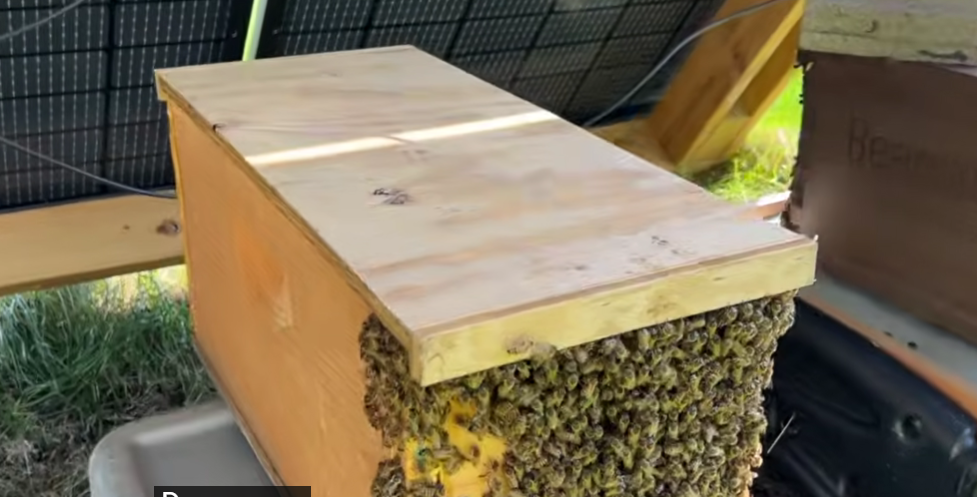
A 5-frame nuc box is one of the more useful pieces of equipment a beekeeper can own. Learn how to build one yourself from plywood.
Checkerboarding is a simple way to get bees to draw out new comb faster in a honey super. Learn how it works and how to set it up.
An honest breakdown of chemical treatments like Amitraz, Formic Acid, Oxalic Acid, and Thymol. Know when to use each for the best safety.
Spotting the queen is an essential skill. Learn the search patterns, how she behaves, and how to pick her up without causing harm.
Finishing hives need a massive population of young nurse bees to feed queen cells. Learn the overcrowding setup and feeding logs.
Varroa mites prefer drone brood. By trap-rearing drones on green plastic frames, you can collect and freeze them to crash mite counts.
A complete developmental timeline of queens, workers, and drones. Understand internal hive roles and field flight sequences.
Grafting is the transfer of tiny larvae into cell cups. Master the wet grafting method, tool choices, and cell bar placement.
Propolis can glue wood almost as tight as cement. Learn the step-by-step prying motions for J-hook and flat tools that save your box.
Push-in cages give the queen a safe area of comb to lay eggs and acquire colony scent before workers release her. Highly successful.
July is a turning point in the apiary. Monitor mite levels, check summer food reserves, manage hive temperatures, and protect weak colonies.
June is swarming season and the start of the summer dearth. Monitor honey supers, add space, and check that colonies don't starve.
A smaller practice box is lightweight, less intimidating, and perfect for learning. Practice frame management and egg spotting.
Small colonies struggle to keep the brood warm. Reduce entrance size, feed light syrup, and inspect conservatively to help them grow.
Weak colonies struggle to draw out wax foundation. Discover how to rotate supers onto your strongest hives to draw out comb fast.
Once robbing starts, it is nearly impossible to stop. Learn to identify robbing behavior and use screens and entrance reducers.
Extreme heat wave conditions put the brood and beekeeper at risk. Learn fanning behaviors, temporary hive shading, and cover venting.
Caging the queen for 14 days resets the mite cycle by removing capped brood. Forces mites onto adult bees for chemical-free control.
Managing queen cell hatch dates is critical. Learn cell development stages, incubator temp requirements, and cage handling.
Finding the queen in the honey super is annoying. Gently shake bees down, set up a queen excluder, and check for eggs.
Spot warning signs like multiple scattered eggs per cell, laying workers, and defensive behavior. Save the colony early.
Bees know their queen is failing before you do. Identify peanut-shaped cells in the center of the brood comb and replace her.
A refractometer tells you the exact moisture content of your honey before you harvest it. That one number determines storage success.
Lifting honey supers to slide a fresh one right above the brood nest is harder work, but bottom supering gets comb drawn faster.
Boost population instantly by swapping hive positions on a warm afternoon. Field foragers will return to the weak box.
Defensive bees require calm movements and smoke control. Learn smoker prep, puffing techniques, and when to close the box.
"Bees don't tolerate bad action. The craft of apiculture teaches patience, planning, and getting out of the bees' way." Aaron has been managing local colonies since 2009. Discover his full winter survival tips, management philosophy, and hive log timeline on the about page.
Meet the Beekeeper →